
Guides / How to build a foreign-trade website
Guide
How to build a foreign-trade website
A practical, step-by-step path to an export site that overseas buyers find, trust, and send inquiries through.
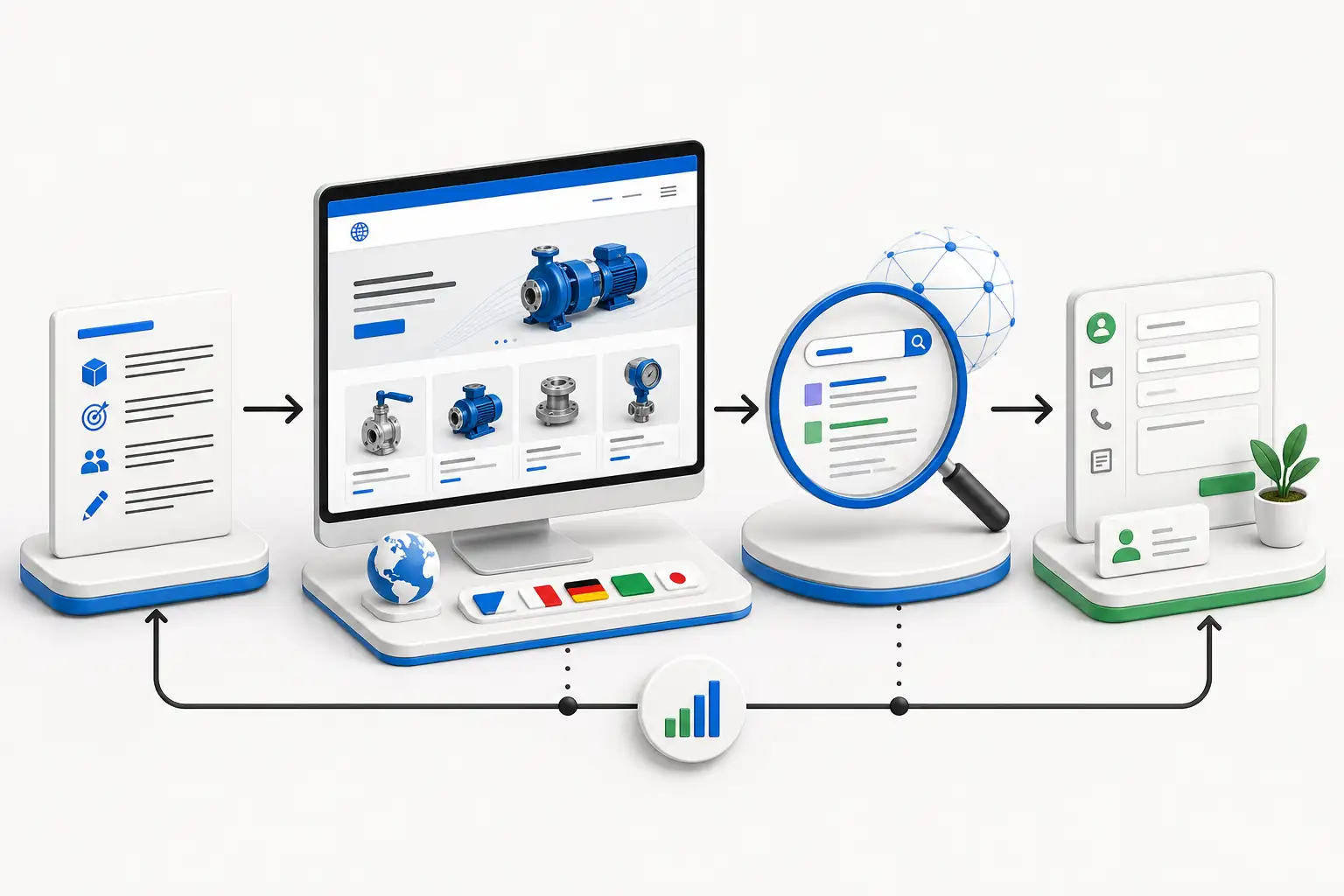
A step-by-step guide to building a foreign-trade website that ranks and converts: structure, content, SEO, inquiry capture and launch.
- Covers: how to build a foreign trade website, foreign trade independent website, export website setup, B2B website guide
A good foreign-trade website does three jobs: it gets found by overseas buyers, builds trust fast, and makes it easy to send an inquiry. Here is how to build one that does all three.
1. Get the structure right
The pages that matter for B2B export: Home (who you are + what you make), Products (one clear page per product line, plus category/aggregation pages), About / Factory (capacity, certifications, team, photos), Contact / Inquiry, and a Blog/Resources section for long-tail SEO. In Waimaoniu AI, the trade consultant (Olivia) gathers these details and the site architect (Victor) turns them into a page plan before anything is built.
2. Write for the buyer, not for yourself
Overseas importers scan for specs, MOQ, certifications, lead time and proof you are a real factory. Lead with those. Use clear English; avoid marketing fluff. Each product page should answer "is this the supplier I want to email?". AI can draft this copy from your product data — and a content-quality check (Waimaoniu's Niueye engine) flags text that reads as machine-written so it can be humanised.
3. Make every page SEO-ready
Each page needs a unique title and meta description containing the terms buyers actually search (product + "supplier", "manufacturer", "wholesale", "OEM"). Use clean URLs, real headings, image alt text, internal links and an XML sitemap. See SEO & GEO for foreign-trade websites.
4. Capture inquiries
Put a short inquiry form on every product page (name, email, country, message). Route submissions to an inbox you check daily, and consider a live-chat widget for visitors who want to ask before they commit. The faster you reply, the more you win — see the RFQ conversion playbook.
5. Publish on your own domain
Use a custom domain (yourbrand.com), enable HTTPS, and submit your sitemap to Google Search Console. Now it is an asset you own and can grow. Waimaoniu AI handles the domain binding, SSL and sitemap submission for you at publish time.
6. Don't stop at launch
A site that is never updated slides down the rankings. Plan to publish content, reply to inquiries, and review your data regularly — the "run" half of the job. This is the part most exporters underestimate, and the part Waimaoniu AI is designed to carry.
The fast way
Doing all of this by hand takes weeks. Waimaoniu AI does steps 1–5 automatically from a one-sentence description, lets you refine visually, and then keeps running step 6 — so you spend your time on buyers, not on building.
Frequently asked questions
- What pages does a foreign-trade website need?
- At minimum: a home page, one page per product line, an about/factory page with certifications and capacity, and a contact/inquiry page. Category/aggregation pages and a blog or resources section help capture long-tail search traffic.
- Do I need a developer to build an export website?
- No. AI website builders like Waimaoniu AI generate the full site — pages, copy and SEO — from a description, so a non-technical exporter can build and publish without a developer or agency.
- Should a foreign-trade site be in English?
- Yes, English is the largest source of overseas search traffic. Multilingual versions with AI translation can be added to target specific markets.
Build your foreign-trade website with AI — free to start
Describe your product in one sentence. Waimaoniu AI builds the site, writes the SEO/GEO content, and starts collecting inquiries.