
Guides / AI website for textile & apparel exporters
Industry
AI website for textile & apparel exporters
Fabrics, collections, MOQ and OEM/ODM — presented so private-label and wholesale buyers commit.
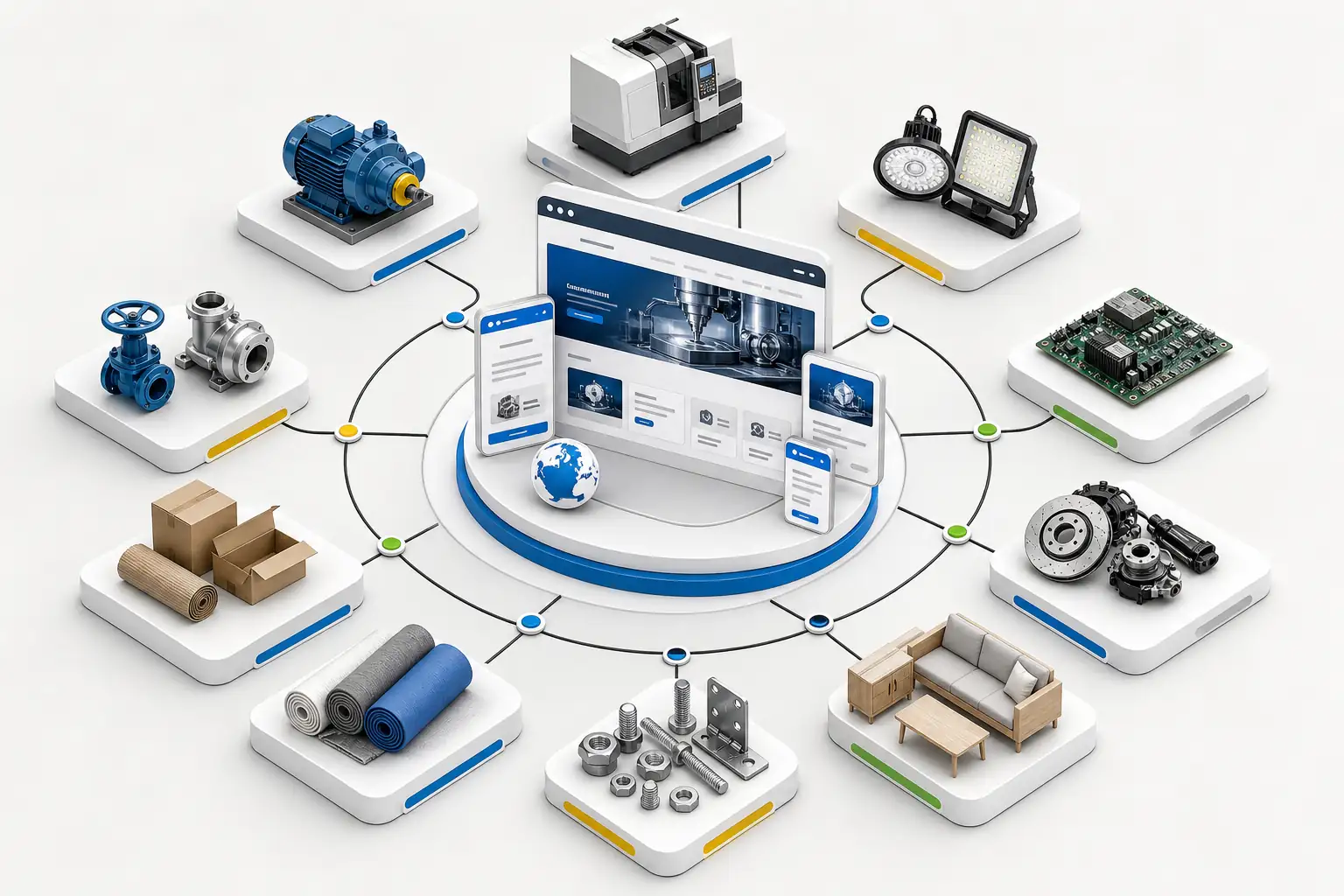
Build an AI website for textile and apparel exporters with fabric pages, MOQ, OEM/ODM options, collections and private-label inquiry paths.
- Covers: textile exporter website, apparel manufacturer website, OEM clothing website, AI website for textile
Textile and apparel buyers — wholesalers, private-label brands, boutiques — care about fabric, quality, MOQ and customization. The site has to show the product beautifully and answer the sourcing questions.
What apparel buyers look for
- Fabric & material details — composition, weight, finish, care.
- Collections / lookbook — organised, editorial-quality visuals.
- MOQ, lead time, OEM/ODM — private-label terms up front.
- Certifications — OEKO-TEX, GOTS, BSCI where relevant.
- Sampling & inquiry — easy to request samples and quotes.
How to build it with AI
Waimaoniu AI builds a clean, collection-based site from a short brief, writes fabric-and-spec descriptions, adds OEM/ODM and certification trust pages, and sets up sample/RFQ capture — without theme wrangling.
Then it gets you found
Buyers search by fabric, product and OEM terms. The platform generates per-page SEO metadata and aggregation pages, and ships crawlable HTML that ranks in Google and is citable by AI engines. See SEO & GEO. The same method works best when the product data, MOQ, materials and application details are specific enough for AI to draft from.
What to review before publishing
Textile and apparel pages should be checked against real product capabilities before they go live: fabric composition, size range, MOQ, sample process, customization options, packaging and lead time. AI can structure the page quickly, but the exporter should confirm every specification, certification and delivery claim before publishing.
After launch, use the page as a working asset. Add buyer questions from inquiries, link related fabrics or collections, and turn repeated sourcing questions into SEO articles or FAQ entries. This keeps the site useful for buyers instead of leaving it as a one-time catalog page.
Frequently asked questions
- What should a textile & apparel exporter website include?
- Fabric and material details (composition, weight, finish, care), collection/lookbook visuals, MOQ/lead time/OEM-ODM terms, relevant certifications (OEKO-TEX, GOTS, BSCI), and sample/RFQ capture.
- What details matter most on textile and apparel export pages?
- Important details include fabric composition, weight, finish, size range, MOQ, sample policy, customization, packaging and compliance information. These details help buyers qualify suppliers before requesting samples or quotes.
Build your foreign-trade website with AI — free to start
Describe your product in one sentence. Waimaoniu AI builds the site, writes the SEO/GEO content, and starts collecting inquiries.